
Fresh-air Restaurant 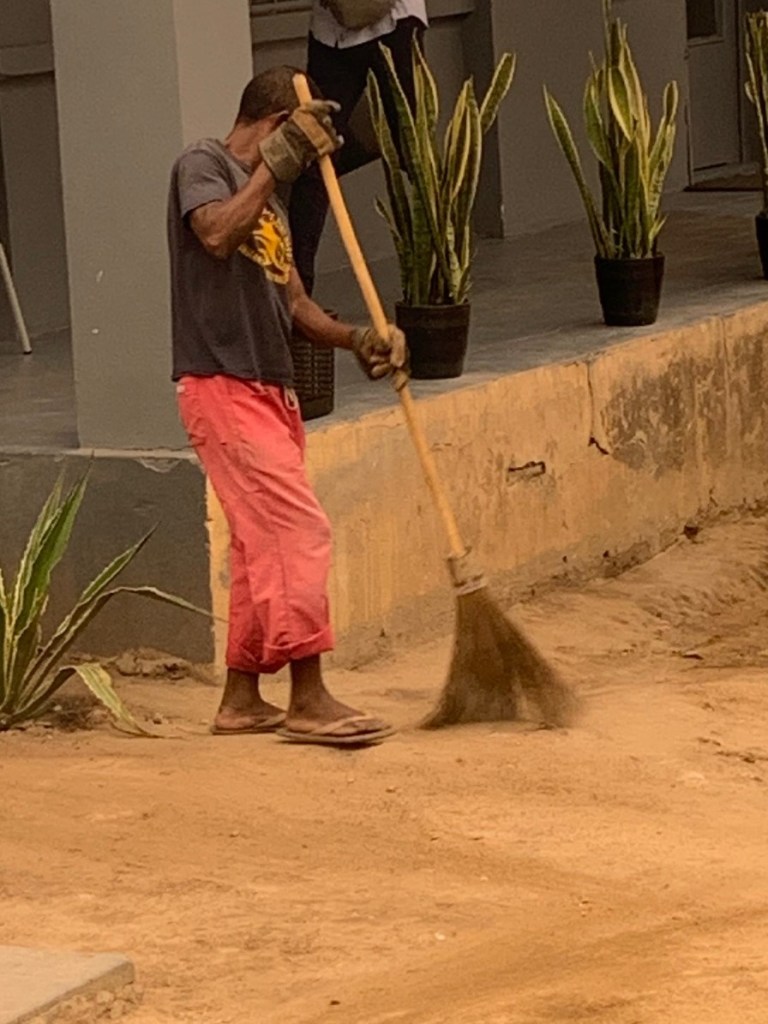

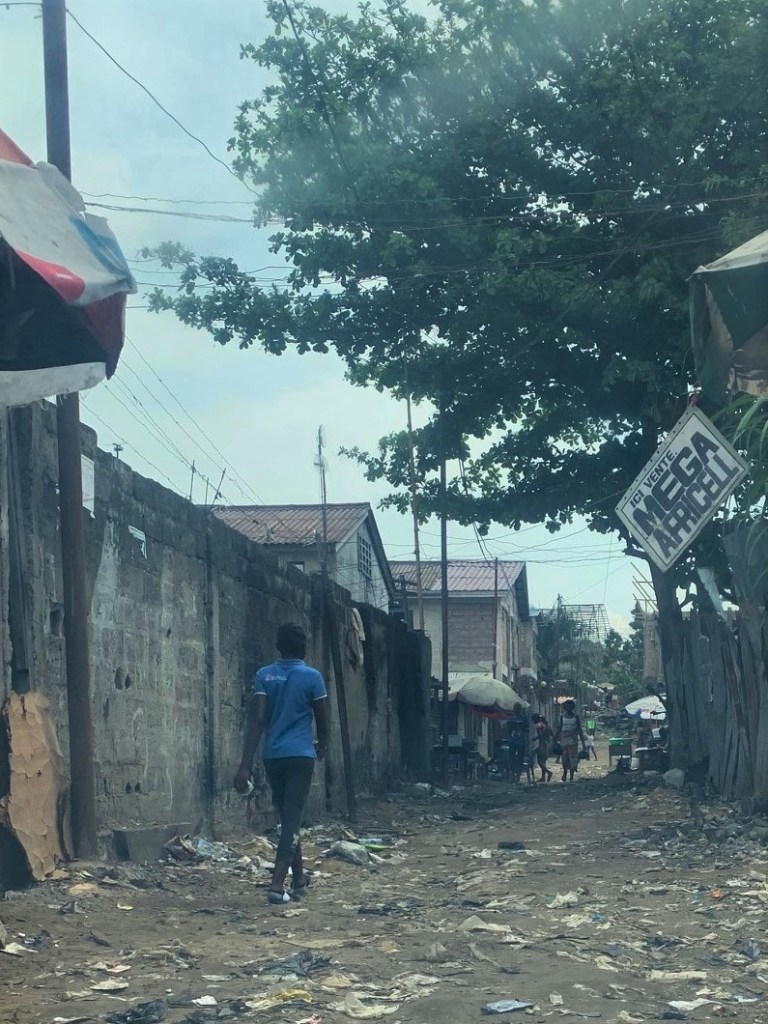
Cinder block wall 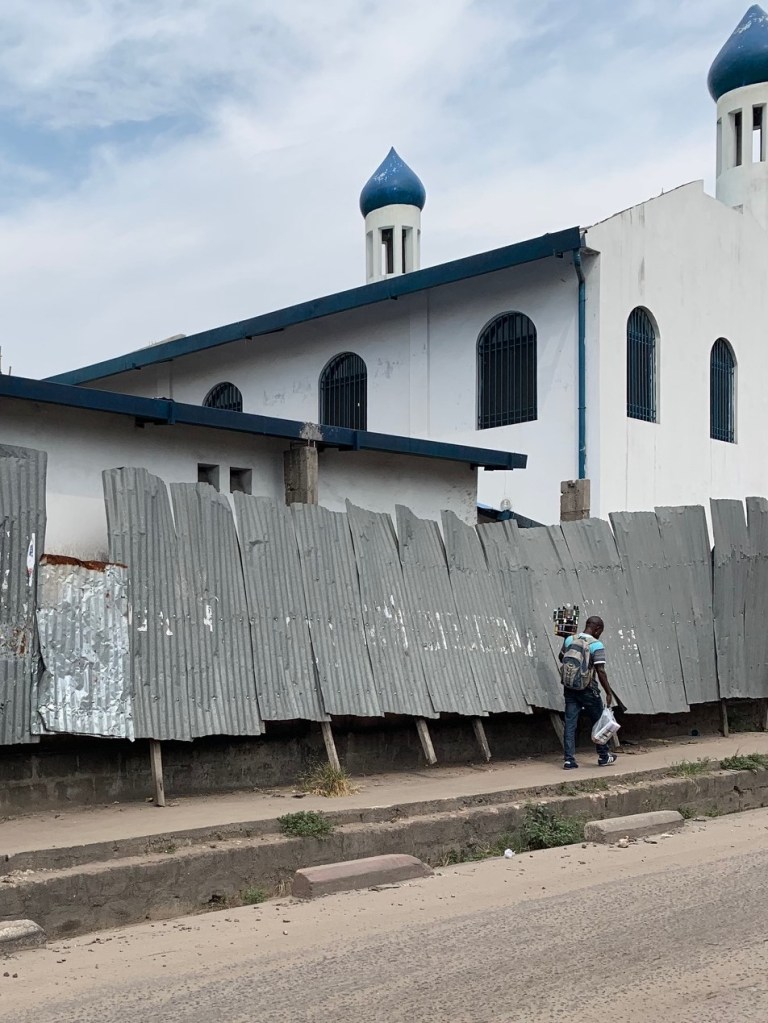
Corrugated wall 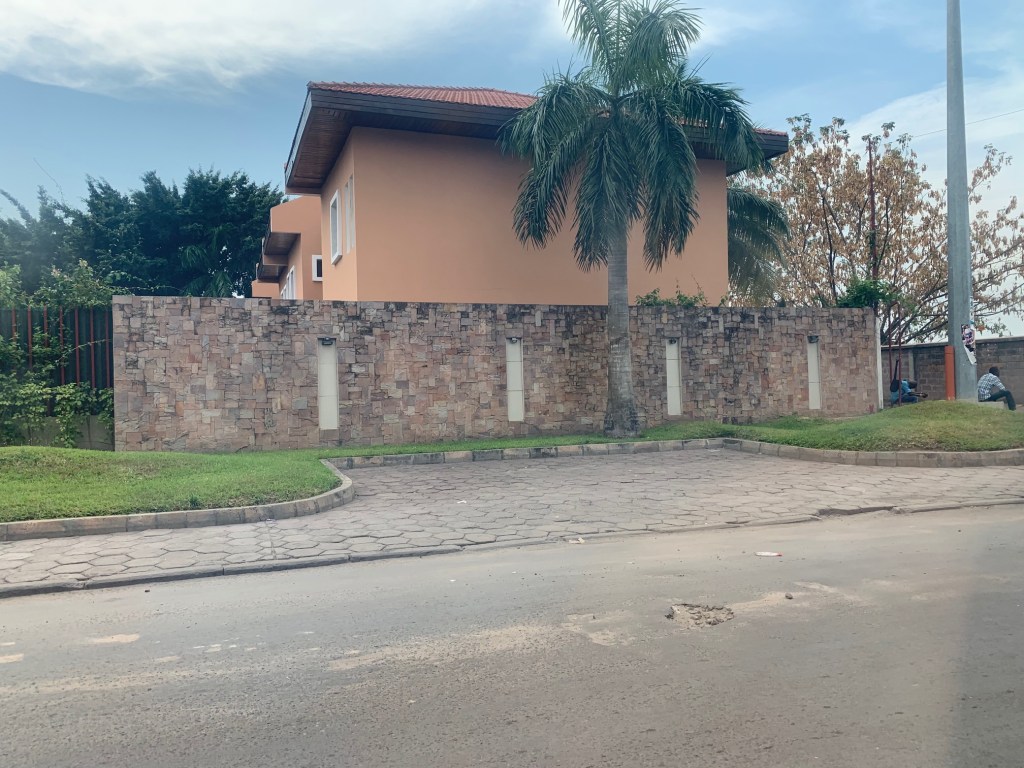
Stone wall 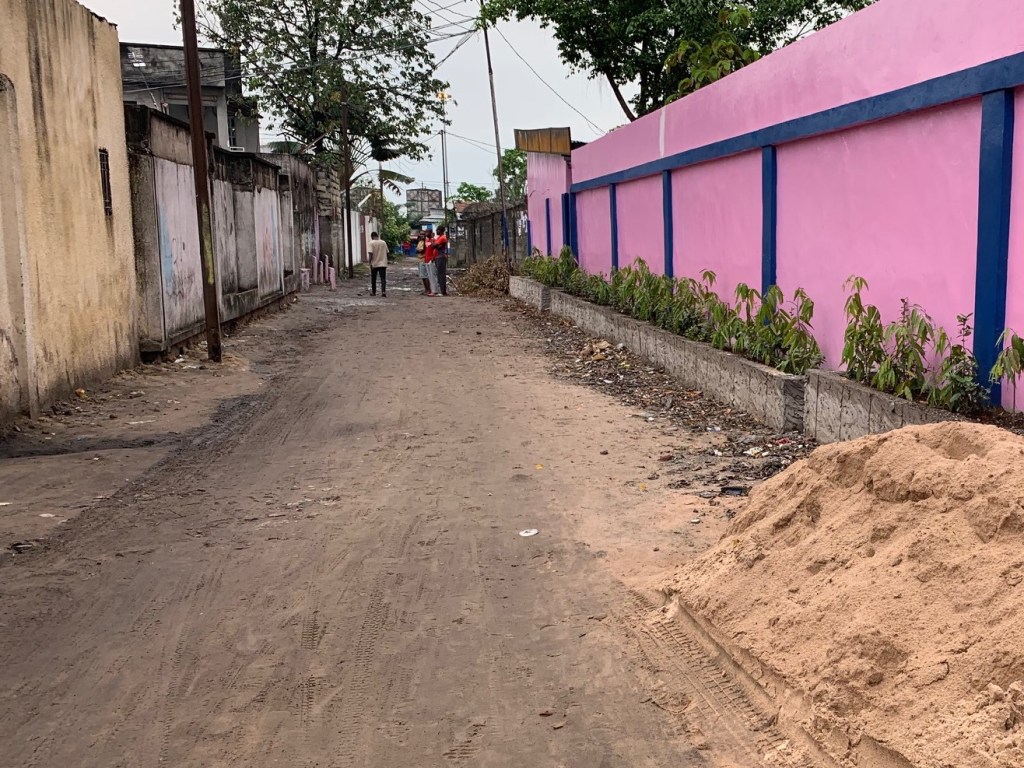
Plaster wall 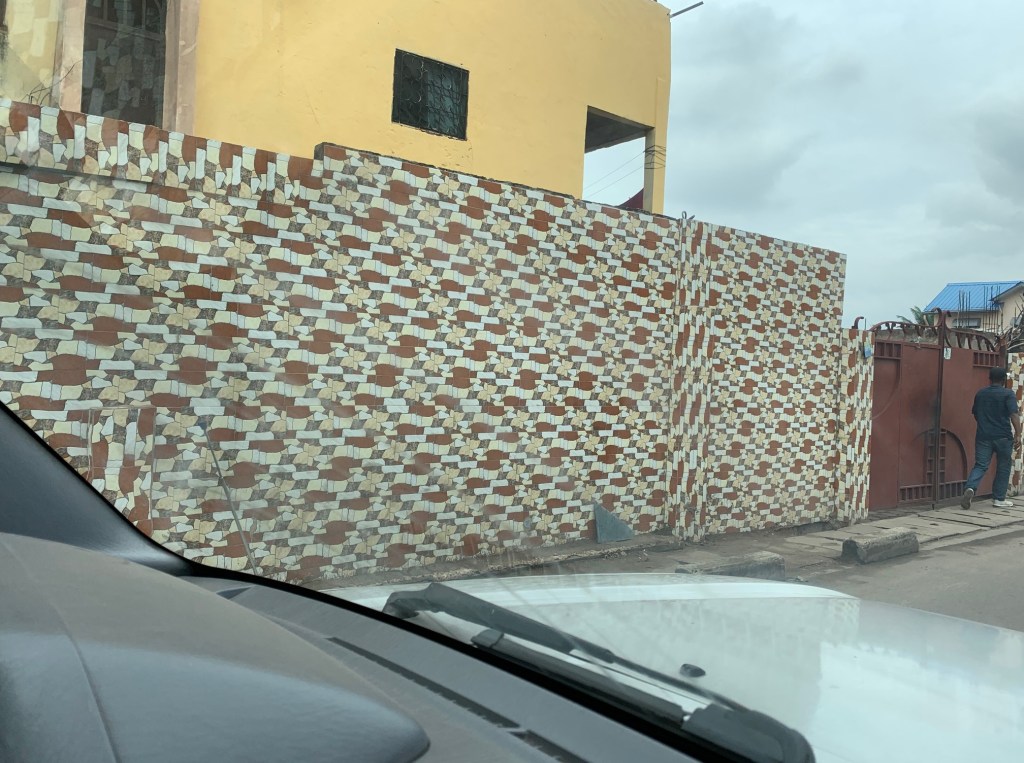
Tile wall
Today a few word pictures
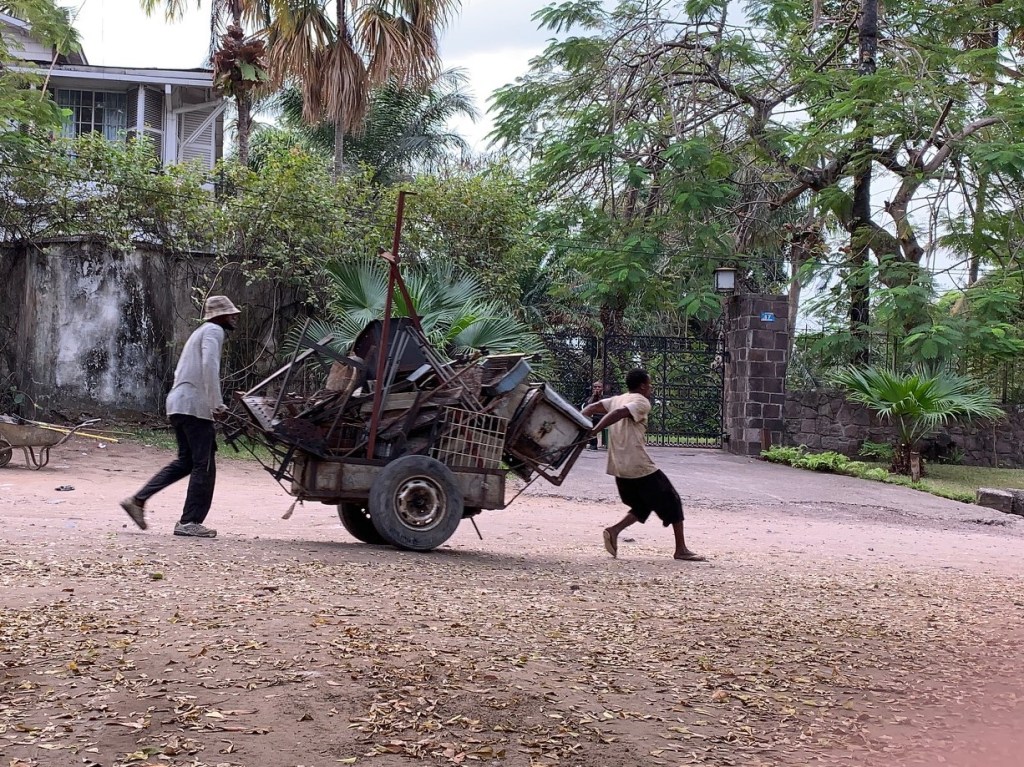
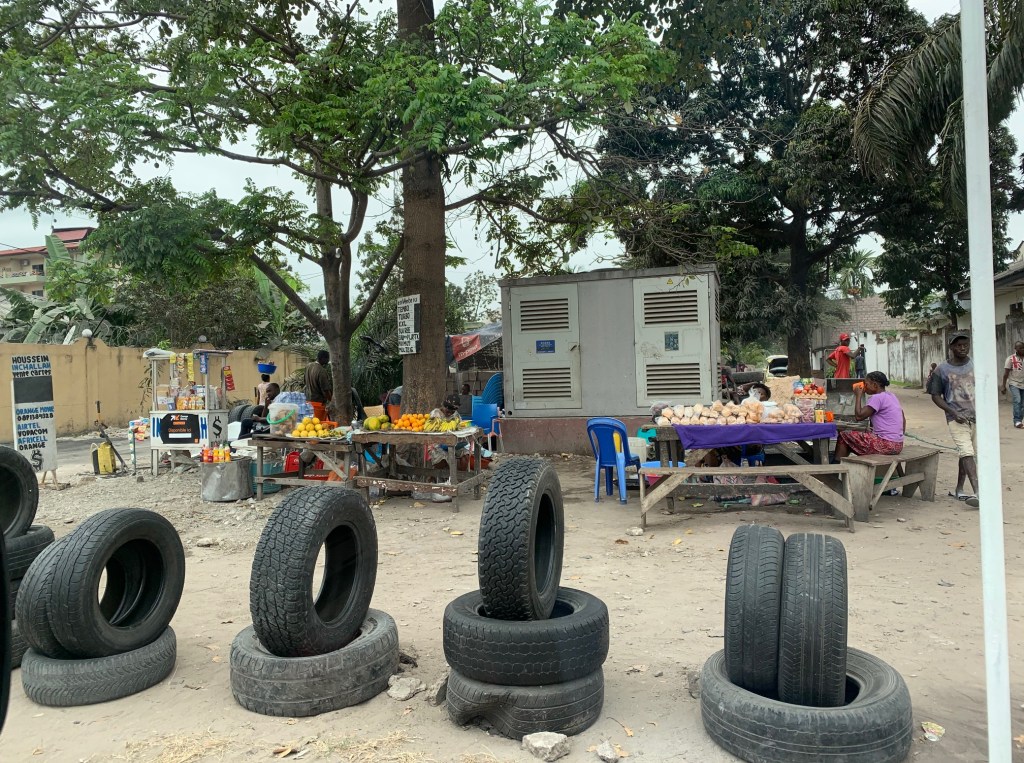
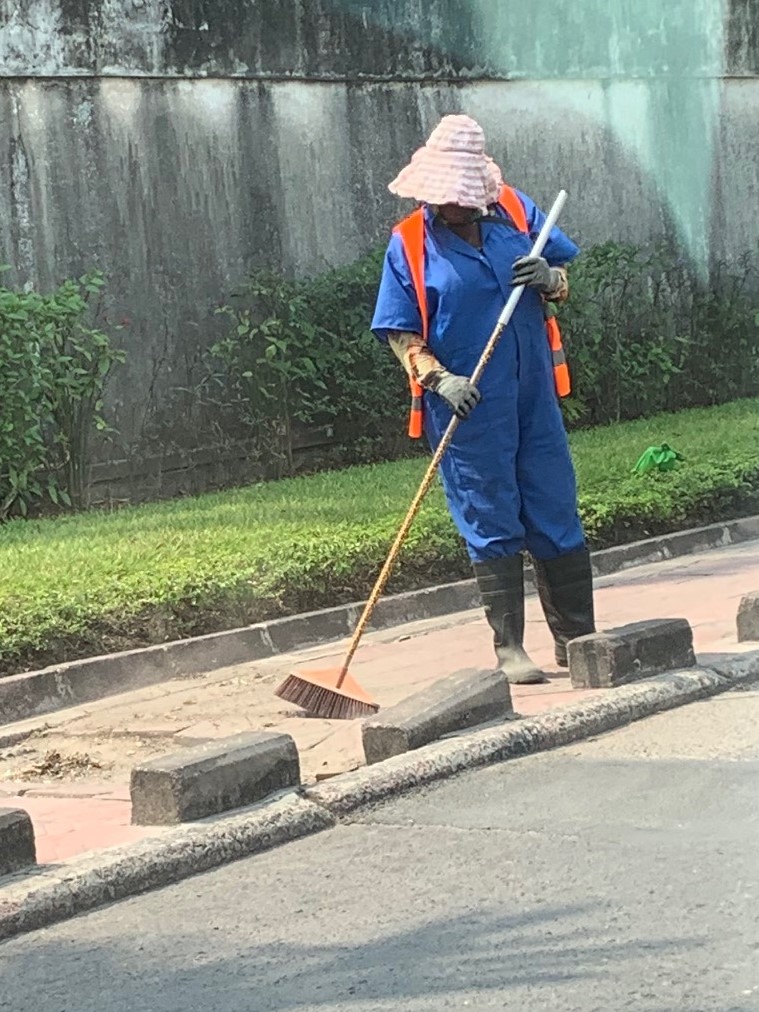
Impressions that stay with me as I observe life here in a city that is physically half the size of Salt Lake valley but with a population of some thirteen million. Of all the places I’ve been in the world, this Congo capital has roused compassion like no other. I decided to ennoble those I observe, so I capitalized their jobs like titles of respect in this poem. Giles
(Read it aloud for greatest effect)
The Walls of Kinshasa
 Teeming millions moving atomically
 amid myriad structures and vehicles
 of old and new design, living between
 and in-front-of each other as if this is
 all there is to life.
                         This is it.
 It’s all they know or get to know
 from birth and every day til death.
 They crowd these squalid streets—
 pocked with pits and strewn with stones
 where Carriers and Sweepers do
 the only thing they know:

 balance burdens on heads held high and still,
 with posture as erect as any king
 or queen—noble, bold, and strong;
 some burdens rise impossibly high
 declaring both a gravitas and grace;
 or swing their pendulum of straw
 to clear the dust from both the streets
 and walkways whether paved or dirt.

 Unlike the Carriers, Sweepers bend
 and stroke the ground with downcast
 gaze to hide their face as if ashamed
 of their demeaning task beside and in
 the traffic and the bustling city life.
 And some will even wear disguise
 as if to say don’t see me here among you.

 Then there are the Watchers who sit
 or stand outside a wall or next to
 tiny stands with food or other wares
 they’ve made or bought to sell
 so they can eek out their existence. Some
 with patched umbrella and old boards to form
 the shelves for neatly stacked tomatoes,
 cigarettes, or bottled pop, or fruit.

 These scenes are ancient: old as Man,
 the scenes outside the walls—those walls
 that close off anything of worth.
                                    Walls line
 all streets and say Keep Out: It’s Mine.
 Outside high walls the slovenly tenements
 all lean and tip together, rusty, rustic, rude,
 Exposed to storm and sun and theft.

 Behind the walls, all topped with rolls of wire
 as barbed as any warzone, warning us Beware
 of Guards—those other Watchers—always there
 like sentinels and stark reminders of how cold
 the most recent revolution chills their blood.

 Whatever thrives inside those walls is private,
 so unlike the public sharing, vacant staring, all-
 too-naked, so-called living that survives outside.

   DRC 15 September 2019
A Day in the Life
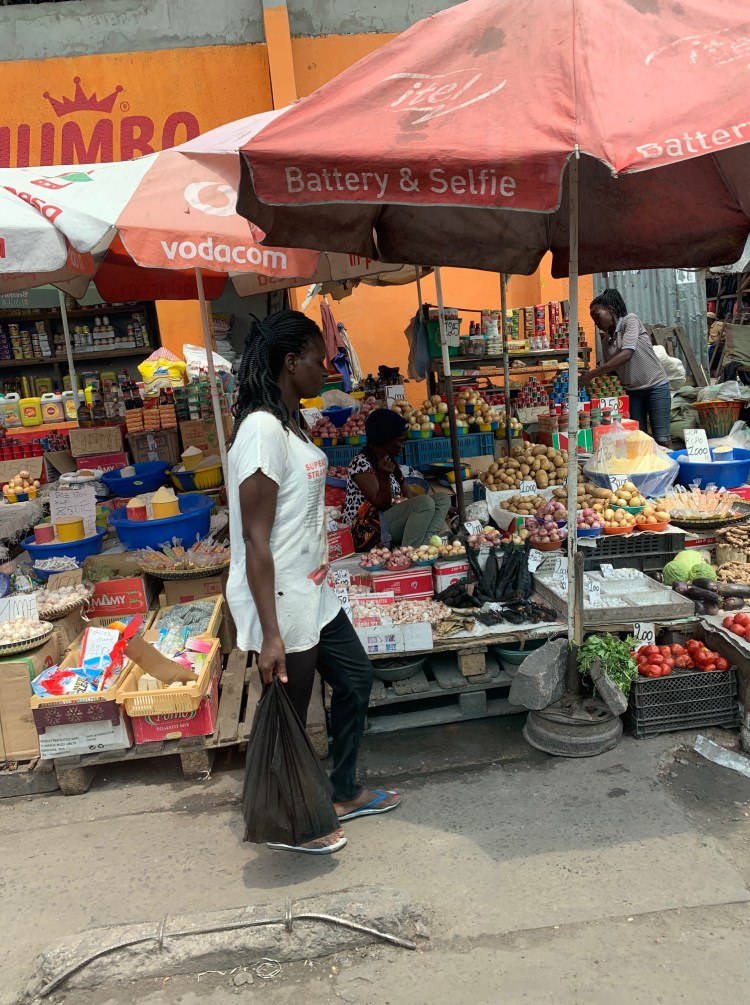
Typical street market scene. 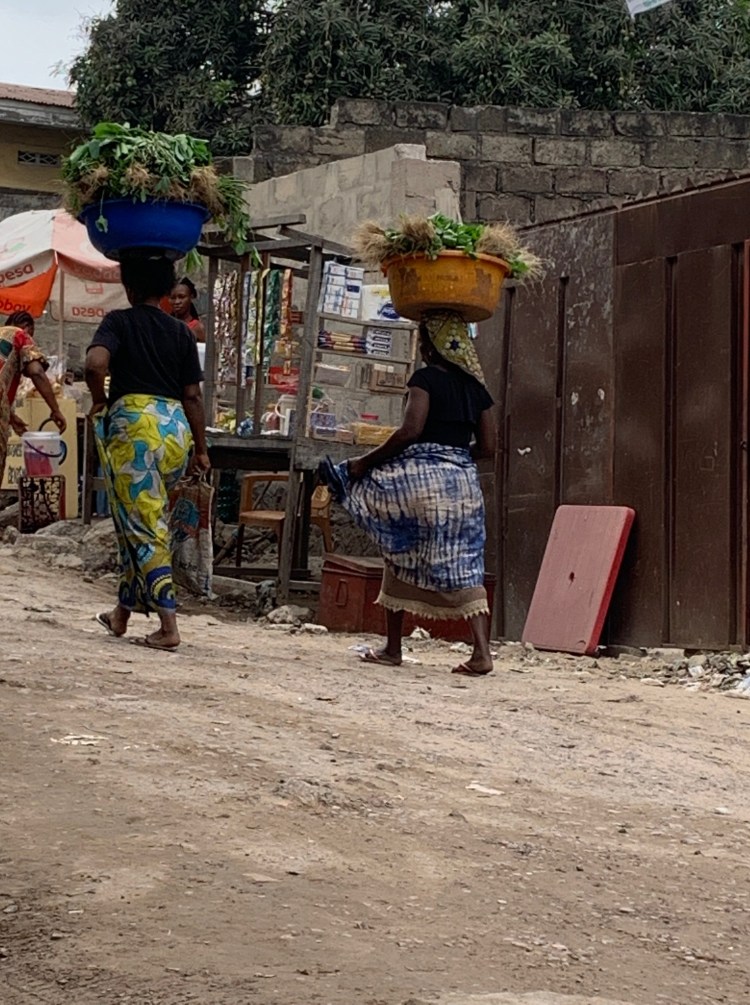
Balancing act! 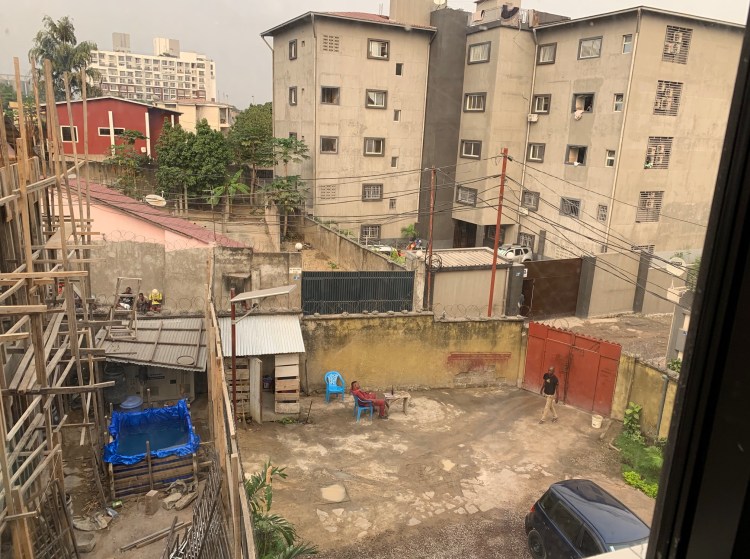
Our courtyard where the security guard is stationed in that little shed. 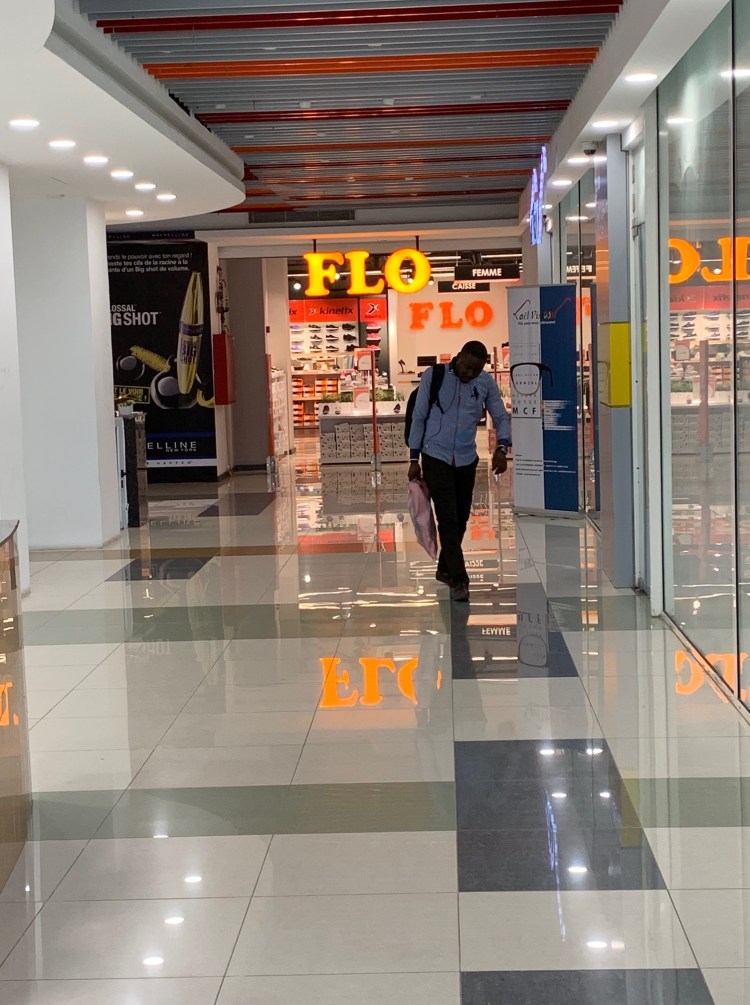
Best store in Kinshasa! 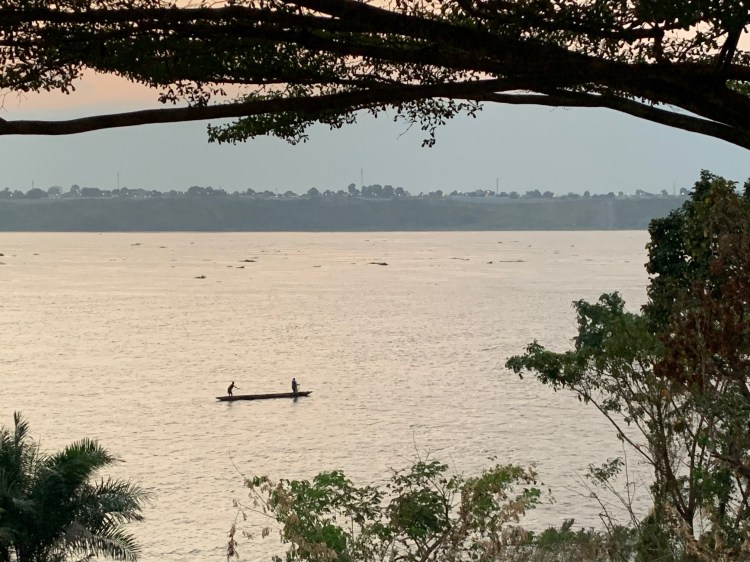
Congo River fisherman following a centuries-old tradition.
From Ann, 9/12/19 (This date is a palindrome!)
You may wonder what our daily routine is like. I wonder myself, since every day is different from the one before and the one to come. But there are things that happen every day.
- Every day, breakfast begins with oatmeal and powdered milk, supplemented by toast and jam, juice from a box, sometimes an egg.
- Each morning, a driver picks us up. Yes, I have a chauffeur! It’s always Didier, a fine man who doesn’t speak English and chatters over his phone in Lingala (one of three official languages here) while he drives like a shark through minnows. Even among fearless road warriors, he takes aggressive driving to a new level. There’s some comfort in the fact that his car has fewer scars than most, but maybe that’s because he hasn’t had it very long!
- Our private security guard in the maroon uniform opens the tall gate for us.
- Our trip to wherever we are going (more about that later) begins with a bouncy ride down alley-wide dirt roads past nice homes and apartments with security guard standing watch.
- Soon we hit paved streets with no lane lines, so you’re following one car and in an instant are facing one head on as if in a game of chicken.
- We watch Kinshasa wake up: entrepreneurs setting up rickety wooden kiosks to show off their wares, long lines at bus stops, motorcycle taxis shuttling smartly dressed women on the back, diners eating breakfast at an outdoor café with a hand painted sign and open pit cooking, parents walking to school hand in hand with their uniformed children in white shirts and dark skirts or pants.
- On our way, I practice French, which is improving at a sloth-like pace.
- While we are gone, a beautiful woman named Clarise comes to iron and tidy up, and then, like a desert miracle, makes a fresh loaf of bread! That bread alone is worth the trip. A warm slice with butter and jam rivals French pastries.
- I always watch for a white person. Today we saw one! Except for Mormon temple missionaries, it’s the first in ten days.
- At least one stranger smiles at me. Today it was the daring policewoman risking life and limb to direct traffic. Trying to direct traffic, that is.
- We take turns cooking much healthier dinners than I do at home. Marcy uses beans as an artistic medium.
- Dogs bark through much of the night.
- Every day I shiver in disbelief that we are in Africa.
- Every day I miss my tribe at home.
Congo Rising
From Ann, 9/6/19
Rise. Lift. Launch. Ascend. Transcend.
I search my mind for all those words defying gravity. The Democratic Republic of Congo emerged from a dark past. Of all the African countries, this one had the terrible misfortune to be claimed and then ruled from afar by a cruel, avaricious Belgian king, who, though he never stepped foot in his prize colony, killed, maimed, and sickened millions by decree.
I raise my eyes from the tragic saga I’ve been reading, King Leopold’s Ghost, to see a country whose people are learning, building, and creating a new future out of a country which has belonged to them again for only 59 years since they claimed independence in 1960. Think about it—59 years. When the United States was 59 years old, we still owned slaves whose tortuous labor produced wealth they would never own. We certainly had not kept the promises we made to the world.
Everywhere here, something is rising. First, it was my blood pressure, which caused my heart to almost burst as we came within inches from a million little cars weaving through the dark of night at frighteningly high speeds. I can now ride through Kinshasa’s scrambled streets with a steady pulse.
From our rooftop, I see at least seven buildings under construction, including a high-rise in the distance with a giant crane perched on top. The sound of hammering is incessant.
I see tall, slender men and women walking with solemn purpose. Teachers sing songs of joy. Children as young as six carry backpacks filled with books. Parents drop their children at school with unbounded hope. Men pull carts weighted by huge loads of bricks, stones, even re-bar. People balance on their heads overflowing bowls of fruit and vegetables, stacks of bottled water, or sacks filled with the day’s purchases.
Of course despair is here. And hunger and bleakness and disease. Trash fills dirt streets and clogs narrow canals.
But Congo is on the rise, day by day ascending higher, transcending its past through the miraculous effort of its people.

We Arrived in Congo
From Giles 9.5.19
Boomlay Boomlay Boomlay Boom. We arrived one week ago and finally got this blog set up. We’ve had issues staying connected to a weak and fluctuating bandwidth. In fact, even our source of electricity is uneven. One minute we’re sitting in a room with the lights on and music in the background. The next thing you know it’s dark, without sound. And within a minute if we’re lucky, power is back. Things we take for granted at home are suddenly appreciated anew, like clean running water. The tap water isn’t drinkable, though it’s nice to have for all the other uses.
Our first week has been rich in new sights, sounds, other sensations. Our introduction to Kinshasa was immediate–the drive from the airport in the dark, at 6:30 in the evening. Traffic is madly chaotic; all rules of the road are mere suggestions. It’s literally like the bumper cars, going in all directions at once. And the first car that crowds into an intersection or lane has the advantage, and believe me, they take the advantage with boldness that can be frightening to new eyes. Courtesy among drivers is selective and must work according to a subtle code; I can never tell when our driver will yield to another or when he will bolt ahead.
We’ve come to teach English in Kinshasa with the American Language Institute, an NGO set up by Hugh and Marcy Matheson. We had known and admired them, and I had taught two of their children, but in this first week we’ve become fast friends. They’ve established their program on five separate campuses, where we’ve met scores of students and dozens of teachers, The faculty and administrative staff are entirely Congolese. And our job is to work with them and the students to reinforce clear pronunciation of American English and teach critical thinking skills using a well-established curriculum. With the beginning of a new school year here, we’re helping establish new routines and practices. While doing this, Annie and I have begun learning French, as they work on their English. So we’re having fun inviting students to help us with our pronunciation as we help them with theirs. We have committed ourselves until December 17, when we’ll return home for Christmas, Giles
 Congo Calling